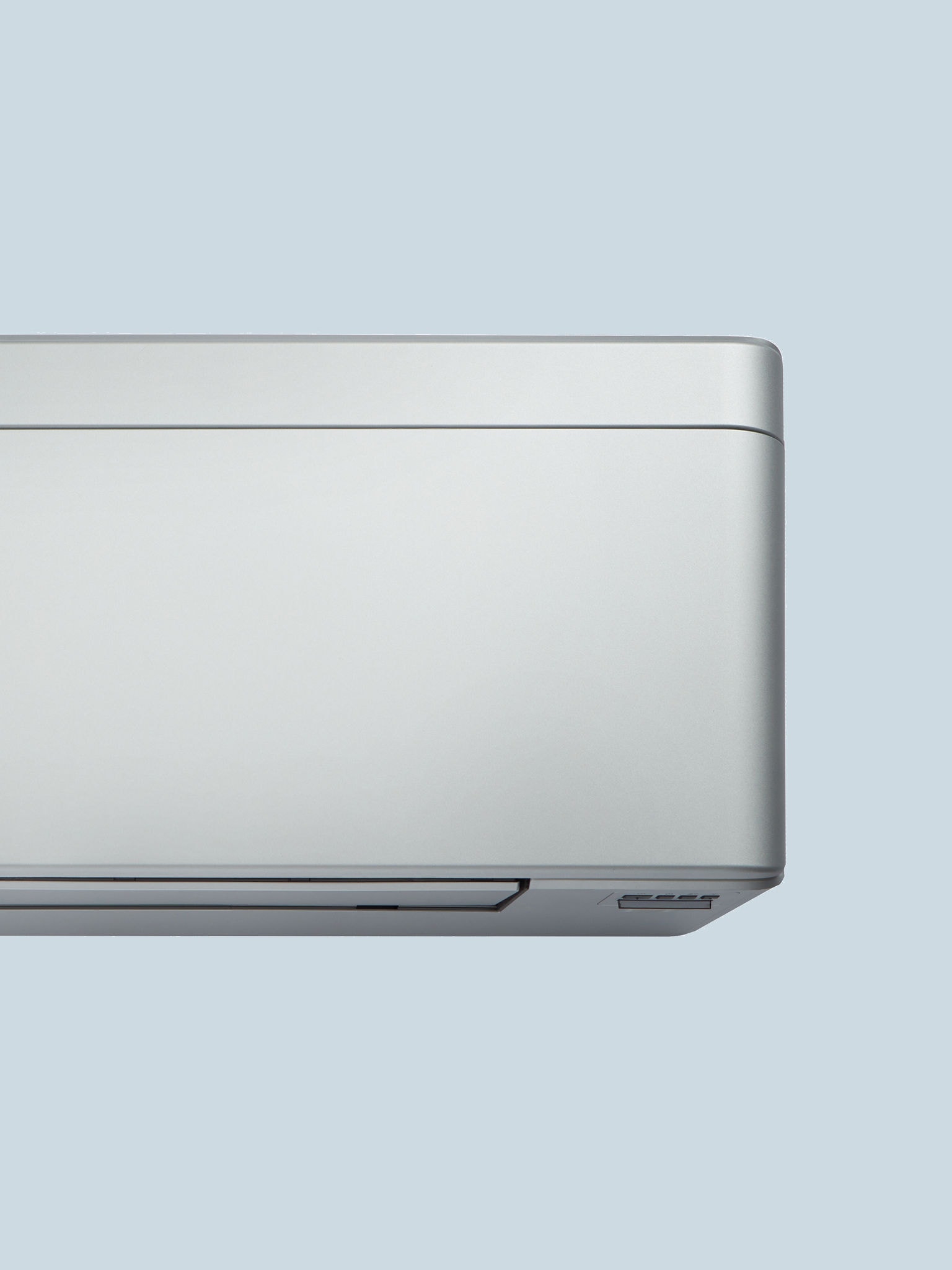
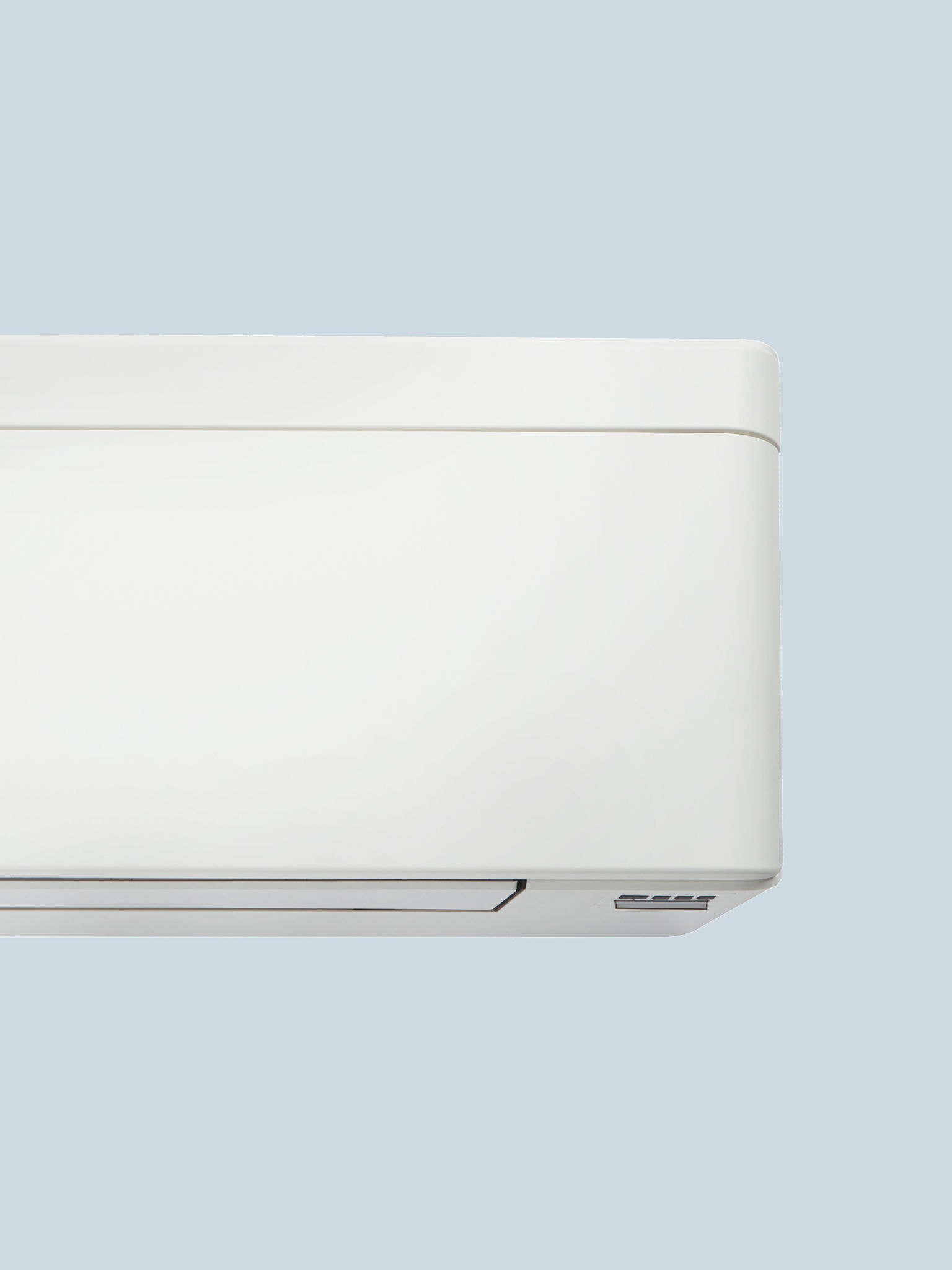
.jpg)
.jpg)

Avantages
Vous êtes un expert et vous avez un produit précis en tête ?
Consultez notre recherche de produitsInformations sur les prix
Éléments inclus dans cet ensemble

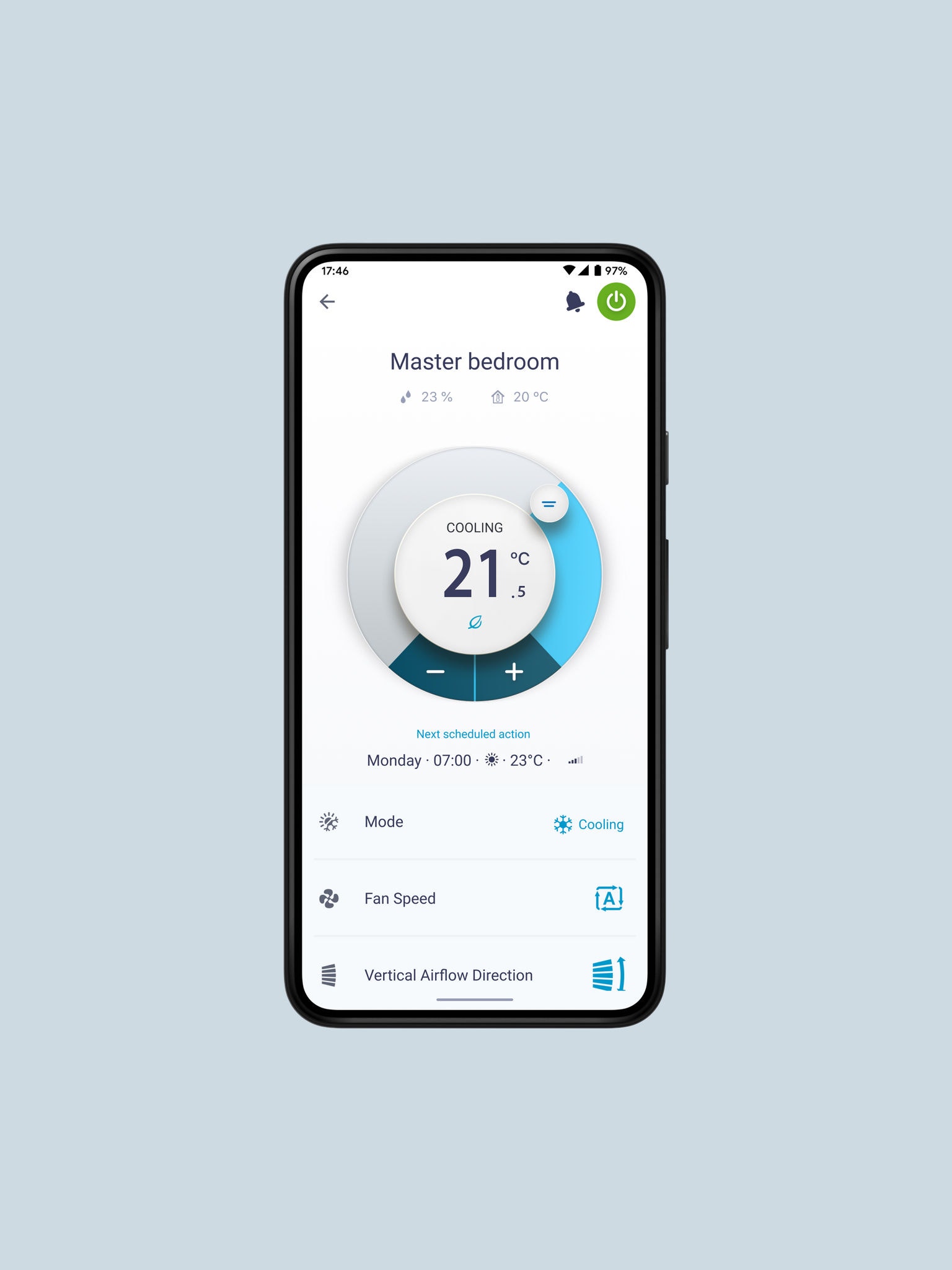
Télécommande
La télécommande intuitive et facile à utiliser permet un contrôle total
Infos produits
- Niveau de pression sonore
- 19 dBA (super silencieux)
- Puissance chauffage rafraîchissement (kW)
- jusqu’à 8.2kW / 7.1kW
- Label énergétique chauffage (kW)
- jusqu’à A+++ en paire et multi
- Label énergétique rafraîchissement (kW)
- jusqu’à A+++
- Unités intérieures sur un groupe extérieur unique
- jusqu’à 5
- Dimensions unité intérieure (hxwxd)
- 298x804x252 mm (pour la classe 20-50)
Regardez et comprenez les climatiseurs
Installez-vous confortablement et découvrez tout ce que vous devez savoir sur nos solutions grâce à ces histoires, soigneusement sélectionnées pour vous.
Informations supplémentaires sur les climatiseurs
The air conditioner indoor unit is the part of an air conditioner system that’s located within the home, and provides the conditioned air into the space.
The choice of an air conditioner indoor unit depends on your specific needs but it's important to understand how the system works as a whole. There are different air conditioners, each with its own unique characteristics. One of the most popular types used in homes is a split system, which is split into two units: one indoors and one outdoors. While heating, the outdoor unit extracts heat from the outside air and transfers it inside via the indoor unit, or reverse when cooling your home.
There are three types of air conditioning indoor units:
Wall-mounted units
Wall-mounted models (Stylish, Ururu Sarara, Daikin Emura, Perfera,) come in different sizes and colours to match with your interior.
Floor-standing units
Floor-standing models (Perfera Floor) are compact air conditioners that fit perfectly under a window sill or in a room where the height is limited.
Concealed ceiling units
Concealed ceiling units. If you don't want a visible indoor unit, a concealed air conditioner can be installed in suspended ceilings or false walls.
There are three options for the placement of the indoor unit of an air-to-air heat pump (also known as air conditioner):
A wall-mounted unit
A wall-mounted unit is ideally positioned above a door or centrally placed in a room. To provide the best comfort, it is not recommended to place the unit above a sofa, the head of the bed or a large closet. This will ensure the airflow can be distributed evenly throughout the room.
A floor-standing unit
A floor-standing unit can be installed underneath a window to avoid that the airflow is blocked. The unit should also not be blocked by furniture to ensure air flows evenly around the room.
A concealed ceiling unit
A concealed ceiling unit is installed in a false ceiling and therefore offers more flexibility thanks to its compact design as only the grilles are visible. The area around the vent should not be blocked by furniture and ideally not directly above a sofa or the head of the bed to ensure optimal comfort.
An air conditioner is typically composed of two units: The indoor and outdoor unit. These are usually called ‘split’ systems.
The split outdoor unit, mounted on an exterior wall or positioned in a garden or on a roof, is the part of an air conditioner that contains the compressor, propeller fan, circuit board and heat exchanger. The outdoor unit compresses the refrigerant that extracts or emits heat or cold in the room to or from its companion indoor unit.
For your air conditioner to function as it should, it is essential that the system is installed correctly. Only an authorised technician should carry out the installation and in a suitable location. The surface must be firm enough to withstand the weight and vibrations of the unit and there must also be sufficient space for airflow and for connecting pipes and power cables. Any plants or shrubs that may be located near your air conditioner should be at least a metre away and regularly pruned. The air conditioner outdoor unit should also be installed in a place that’s easy to access for services and other general maintenance.
We often get asked why we can’t put the air conditioner inside. Could they not be placed in the loft or conservatory? The answer to this is no. This is because, after a few hours, the air conditioner will have extracted all of the warmth from the trapped air, effectively turning this space into a freezer. This is why an air conditioner need access to the free-flowing outside air.
Il est important de faire la différence entre l'entretien et le nettoyage. Certaines étapes tel que le nettoyage des climatiseurs peuvent être effectuées par l'utilisateur, tandis que l'entretien doit être effectué par un technicien professionnel.
Consultez le manuel de votre climatiseur et suivez les instructions qu'il contient sur le nettoyage du climatiseur.
- Nettoyez les grilles/déflecteurs d'alimentation et de reprise d'air avec un chiffon humide et assurez-vous qu'ils ne sont pas obstrués.
- Les filtres peuvent généralement être retirés et nettoyés simplement avec un aspirateur ou en les lavant avec un peu d'eau savonneuse tiède.
- Nettoyez le groupe extérieur, passez un jet d’eau doux pour enlever la saleté et brossez pour éliminer les toiles d'araignée. Veillez à ce que les morceaux de plantes et les feuilles qui se sont accumulés ou qui ont été aspirés à l'arrière du serpentin soient enlevés. Veillez à ne pas endommager les ailettes.
- Attention – les ailettes des serpentins sont très tranchantes. Nous recommandons d'utiliser l'équipement de protection individuelle approprié, y compris des gants.
- N'utilisez PAS d'essence, de benzène, de diluant, de poudre à polir ou d'insecticide liquide.
- N'utilisez PAS d'eau ou d'air dont la température est supérieure ou égale à 40°C.
- N'utilisez PAS de produits de polissage.
- N'utilisez PAS de brosse à récurer.
Faites l'expérience de la différence Daikin
Nous avons sélectionné quelques articles informatifs et inspirants pour vous permettre d'en savoir plus sur la façon dont Daikin peut vous aider
Plus d'infos sur les pompes à chaleur air- air